This is a viewer only at the moment see the article on how this works.
To update the preview hit Ctrl-Alt-R (or ⌘-Alt-R on Mac) or Enter to refresh. The Save icon lets you save the markdown file to disk
This is a preview from the server running through my markdig pipeline
Sunday, 16 November 2025
Quando i tuoi strumenti rintracciano se stessi, si evolvono e scelgono se stessi
Nota: Questa è la parte 8 della serie Semantic Intelligence. La parte 7 ha coperto l'architettura DSE complessiva. Questo articolo si tuffa in profondità in qualcosa che ho lucidato sopra: come funzionano gli strumenti stessi, monitorare l'utilizzo, evolvere, e ottenere più intelligente nel tempo.
Nota: Se pensate che l'evoluzione del flusso di lavoro nella parte 7 fosse selvaggia, aspettate di vedere cosa succede quando ogni singolo strumento ha le stesse capacità.
Nella parte 7, vi ho mostrato Directed Synthetic Evolution: flussi di lavoro che pianificano, generano, eseguono, valutano e migliorano. Ho menzionato "strumenti" un sacco di volte.
Ecco cosa non ho spiegato:
Questi strumenti? Non sono statici. Non sono file di configurazione che stanno lì immutati.
Sono manufatti viventi che:
In altre parole: Gli strumenti sono nodi. I nodi sono strumenti. Tutto si sta evolvendo.
E diventa sempre piu' strano.
Lasciate che vi mostri cosa ha realmente il sistema:
$ ls -la tools/
drwxr-xr-x  llm/          # LLM-based tools (27 specialists)
drwxr-xr-x  executable/   # Executable validators/generators
drwxr-xr-x  openapi/      # External API integrations
drwxr-xr-x  custom/       # User-defined tools
-rw-r--r--  index.json    # 5,464 lines of tool metadata
Che index.json? 5.446 linee delle definizioni degli strumenti, delle statistiche di utilizzo, della cronologia delle versioni, dei punteggi di idoneità e del tracking del lineage.
Ogni strumento che c'e' li' dentro:
NOTA: Il sistema in realtà funzionerà SENZA alcun utensile. Solo meno efficiente; e più stupido. Senza di essi gli strumenti sarebbero generati come una parte normale della decomposizione del flusso di lavoro. Si adatterebbe ancora lentamente, ma ci vorrebbero way più gettoni.
Diamo un'occhiata a quello che è un attrezzo in realtà.
Qui è una definizione reale dello strumento dal sistema:
tools/llm/long_form_writer.yaml
name: "Long-Form Content Writer"
type: "llm"
description: "Specialized for writing long-form content (novels, books, long articles) using mistral-nemo's massive 128K context window."

cost_tier: "high"
speed_tier: "slow"
quality_tier: "excellent"
max_output_length: "very-long"

llm:
  model: "mistral-nemo"
  endpoint: null
  system_prompt: "You are a creative writer specializing in long-form content. You have a massive 128K token context window..."
  prompt_template: "{prompt}\n\nPrevious context:\n{context}\n\nGenerate the next section maintaining consistency."

tags: ["creative-writing", "novel", "story", "long-form", "article", "book", "large-context"]
Notate cosa c'è:
Ma ecco cosa c'e'. non nella YAML:
# Auto-generated at runtime:
tool.usage_count = 47           # How many times used
tool.version = "1.2.0"          # Semantic versioning
tool.definition_hash = "a3f5..."# Change detection
tool.quality_score = 0.89       # From evaluations
tool.avg_latency_ms = 12_400    # Performance tracking
tool.last_updated = "2025-11-15"
Il sistema aumenti definizioni statiche con apprendimento runtime.
Ecco cosa succede quando si utilizza uno strumento:
# User request
result = tools_manager.invoke_llm_tool(
    tool_id="long_form_writer",
    prompt="Write a romance novel chapter"
)

# Behind the scenes:
sequenceDiagram
    participant U as User
    participant TM as ToolsManager
    participant RAG as RAG Memory
    participant LLM as Long Form Writer
    participant Metrics as Metrics Tracker

    U->>TM: invoke_llm_tool("long_form_writer", prompt)

    TM->>RAG: Check cache (tool + prompt hash)

    alt Cache Hit
        RAG-->>TM: Cached response (v1.2.0, fitness: 0.89)
        TM->>Metrics: Increment cache_hits
        TM-->>U: Return cached result ✓
    else Cache Miss
        TM->>Metrics: Start timer
        TM->>LLM: Generate response
        LLM-->>TM: Response
        TM->>Metrics: Record latency, quality
        TM->>RAG: Store invocation with metadata
        TM->>TM: Update tool.usage_count++
        TM-->>U: Return result
    end

    TM->>Metrics: Update adaptive timeout stats
    TM->>RAG: Update tool fitness score
Cosa viene rintracciato:
Diamo un'occhiata al meccanismo di cache.
Il pezzo più intelligente: lo strumento di cache di sistema invoca a più livelli.
Livello 1: esatto match cacheing
def invoke_llm_tool(self, tool_id: str, prompt: str) -> str:
    """Invoke LLM tool with hierarchical caching."""

    # Normalize prompt for exact matching
    normalized_prompt = prompt.lower().strip()

    # Search RAG for previous invocations
    tool_invocations = self.rag_memory.find_by_tags(
        ["tool_invocation", tool_id],
        limit=100
    )

    # Find ALL exact matches for this tool + prompt
    matches = []
    for artifact in tool_invocations:
        cached_prompt = artifact.metadata.get("user_prompt", "").lower().strip()
        if cached_prompt == normalized_prompt:
            # Collect fitness and version
            matches.append({
                "artifact": artifact,
                "fitness": artifact.metadata.get("fitness_score", 0.0),
                "version": artifact.metadata.get("version", "1.0.0"),
                "timestamp": artifact.metadata.get("timestamp", 0)
            })

    if matches:
        # Select LATEST, HIGHEST FITNESS version
        best_match = sorted(
            matches,
            key=lambda m: (m["fitness"], m["timestamp"]),
            reverse=True
        )[0]

        logger.info(
            f"✓ CACHE HIT: Reusing result for '{tool.name}' "
            f"(version {best_match['version']}, fitness {best_match['fitness']:.2f})"
        )

        # Increment usage counters
        self.increment_usage(tool_id)
        self.rag_memory.increment_usage(artifact.artifact_id)

        return best_match["artifact"].content
Perche' questo e' importante:
Se si chiede al sistema di "scrivere un haiku su codice" due volte, la seconda volta è istantaneo. LLM non funziona. La memoria RAG restituisce il risultato della cache.
Ma ecco la parte intelligente: restituisce la versione BEST se esistono più di una persona.
Esempio:
Invocation 1: "write a haiku about code"
  → Generated with tool v1.0.0
  → Fitness: 0.75
  → Stored in RAG

Invocation 2: "write a haiku about code" (exact match!)
  → Tool evolved to v1.1.0
  → Fitness: 0.92 (better!)
  → Stored in RAG

Invocation 3: "write a haiku about code"
  → Finds BOTH cached versions
  → Selects v1.1.0 (higher fitness + later timestamp)
  → Returns best result instantly
Il sistema seleziona automaticamente il risultato della cache di alta qualità.
Una delle caratteristiche più sottili: il sistema impara quanto tempo ci vuole per rispondere a ogni modello.
Il problema:
Diversi modelli hanno tempi di risposta estremamente diversi:
tinyllama (2B): ~3 secondillama3 (8B): ~10 secondiqwen2.5-coder (14B): ~25 secondideepseek-coder-v2 (16B): ~60 secondiSe si imposta un timeout globale (diciamo, 30s), si sprecano 27 secondi in attesa di tinyllama, e si uccide deepseek prima che finisca.
La soluzione: Apprendimento Adattivo
def _update_adaptive_timeout(
    self,
    model: str,
    tool_id: str,
    response_time: float,
    timed_out: bool,
    prompt_length: int
):
    """Learn optimal timeout from actual performance."""

    # Get existing stats
    stats_id = f"timeout_stats_{model.replace(':', '_')}"
    existing = self.rag_memory.get_artifact(stats_id)

    if existing:
        response_times = existing.metadata.get("response_times", [])
        timeout_count = existing.metadata.get("timeout_count", 0)
        success_count = existing.metadata.get("success_count", 0)
    else:
        response_times = []
        timeout_count = 0
        success_count = 0

    # Update stats
    if timed_out:
        timeout_count += 1
    else:
        success_count += 1
        response_times.append(response_time)
        response_times = response_times[-50:]  # Keep last 50

    # Calculate recommended timeout (95th percentile + 20% buffer)
    if response_times:
        sorted_times = sorted(response_times)
        p95_index = int(len(sorted_times) * 0.95)
        p95_time = sorted_times[min(p95_index, len(sorted_times) - 1)]
        recommended_timeout = int(p95_time * 1.2)

        logger.info(
            f"Adaptive timeout for {model}: {recommended_timeout}s "
            f"(based on {len(response_times)} samples)"
        )
Come funziona:
Risultati:
Model: tinyllama
  Samples: 50
  95th percentile: 3.2s
  Recommended timeout: 4s  (3.2 * 1.2)

Model: qwen2.5-coder:14b
  Samples: 50
  95th percentile: 28.5s
  Recommended timeout: 34s  (28.5 * 1.2)
Il sistema impara il timeout giusto per ogni modello invece di usare un valore globale.
Quando si chiede al sistema di fare qualcosa, non si sceglie solo il primo strumento di corrispondenza. Funzione di fitness in più dimensioni.
Calcolo fitness:
def calculate_fitness(tool, similarity_score):
    """
    Calculate overall fitness score (0-100+).

    Factors:
    - Semantic similarity (how well it matches the task)
    - Speed (fast tools get bonus)
    - Cost (cheap tools get bonus)
    - Quality (high-quality tools get bonus)
    - Historical success rate~~~~
    - Latency metrics
    - Reuse potential
    """
    fitness = similarity_score * 100  # Base: 0-100

    metadata = tool.metadata or {}

    # Speed bonus/penalty
    speed_tier = metadata.get('speed_tier', 'medium')
    if speed_tier == 'very-fast':
        fitness += 20
    elif speed_tier == 'fast':
        fitness += 10
    elif speed_tier == 'slow':
        fitness -= 10
    elif speed_tier == 'very-slow':
        fitness -= 20

    # Cost bonus (cheaper = better for most tasks)
    cost_tier = metadata.get('cost_tier', 'medium')
    if cost_tier == 'free':
        fitness += 15
    elif cost_tier == 'low':
        fitness += 10
    elif cost_tier == 'high':
        fitness -= 10
    elif cost_tier == 'very-high':
        fitness -= 15

    # Quality bonus
    quality_tier = metadata.get('quality_tier', 'good')
    if quality_tier == 'excellent':
        fitness += 15
    elif quality_tier == 'very-good':
        fitness += 10
    elif quality_tier == 'poor':
        fitness -= 15

    # Success rate from history
    quality_score = metadata.get('quality_score', 0)
    if quality_score > 0:
        fitness += quality_score * 10  # 0-10 bonus

    # Latency metrics
    latency_ms = metadata.get('latency_ms', 0)
    if latency_ms > 0:
        if latency_ms < 100:
            fitness += 15  # Very fast
        elif latency_ms < 500:
            fitness += 10
        elif latency_ms > 5000:
            fitness -= 10  # Too slow

    # Reuse bonus: existing workflow = less effort
    if tool.tool_type == ToolType.WORKFLOW:
        if similarity >= 0.90:
            fitness += 30  # Exact match!
        elif similarity >= 0.70:
            fitness += 15  # Template reuse

    return fitness
Esempio reale:
Task: "Quickly validate this email address"

Tools found:
1. email_validator_workflow (similarity: 0.95)
   - Speed: very-fast (+20)
   - Cost: free (+15)
   - Quality: excellent (+15)
   - Latency: 45ms (+15)
   - Reuse: exact match (+30)
   → FINAL FITNESS: 190

2. general_validator (similarity: 0.70)
   - Speed: medium (+0)
   - Cost: free (+15)
   - Quality: good (+10)
   - Latency: 850ms (+0)
   - Reuse: none (+0)
   → FINAL FITNESS: 95

3. llm_based_validator (similarity: 0.65)
   - Speed: slow (-10)
   - Cost: high (-10)
   - Quality: excellent (+15)
   - Latency: 8200ms (-10)
   - Reuse: none (+0)
   → FINAL FITNESS: 50
Selezionato: email_validator_workflow (adeguatezza: 190)
Il sistema sceglie il veloce, gratuito, di alta qualità, provato Non la piu' semanticamente simile, non la piu' potente.
Quello che soddisfa in modo ottimale molteplici vincoli.
Gli attrezzi non rimangono statici, si evolvono.
Versione & Rilevamento modifiche:
Ogni strumento ha un hash di definizione calcolato dal suo YAML:
def calculate_tool_hash(tool_def: Dict[str, Any]) -> str:
    """SHA256 hash of tool definition for change detection."""
    stable_json = json.dumps(tool_def, sort_keys=True)
    return hashlib.sha256(stable_json.encode('utf-8')).hexdigest()
Quando si modifica YAML di uno strumento:
# BEFORE (v1.0.0)
name: "Email Validator"
tags: ["email", "validation"]

# AFTER (edit the YAML)
name: "Email Validator"
tags: ["email", "validation", "dns-check"]  # Added DNS checking!
Al prossimo carico:
# System detects change
new_hash = calculate_tool_hash(tool_def)  # Different!
old_hash = existing_tool.definition_hash

if old_hash != new_hash:
    # Determine change type
    change_type = tool_def.get("change_type", "patch")  # minor, major, patch

    # Bump version
    old_version = "1.0.0"
    new_version = bump_version(old_version, change_type)
    # new_version = "1.1.0" (minor change)

    console.print(
        f"[yellow]↻ Updated email_validator "
        f"v{old_version} → v{new_version} ({change_type})[/yellow]"
    )
Versione semantica:
def bump_version(current_version: str, change_type: str) -> str:
    """Bump semver based on change type."""
    major, minor, patch = map(int, current_version.split('.'))

    if change_type == "major":
        return f"{major + 1}.0.0"  # Breaking changes
    elif change_type == "minor":
        return f"{major}.{minor + 1}.0"  # New features
    else:  # patch
        return f"{major}.{minor}.{patch + 1}"  # Bug fixes
Breaking changes:
name: "Email Validator"
version: "2.0.0"
change_type: "major"
breaking_changes:
  - "Changed return format from boolean to object"
  - "Removed deprecated 'simple_check' parameter"
  - "Now requires 'domain' to be specified"
In posizione di carico:
[yellow]↻ Updated email_validator v1.3.2 → v2.0.0 (major)[/yellow]
  [red]! Breaking changes:[/red]
    - Changed return format from boolean to object
    - Removed deprecated 'simple_check' parameter
    - Now requires 'domain' to be specified
Il sistema ti avvisa di rompere i cambiamenti e mantiene la cronologia delle versioni.
Ogni strumento viene indicizzato nella memoria RAG per la ricerca semantica:
Tempo di caricamento:
def _store_yaml_tool_in_rag(self, tool: Tool, tool_def: dict, yaml_path: str):
    """Store YAML tool in RAG for semantic search."""

    # Build comprehensive content for embedding
    content_parts = [
        f"Tool: {tool.name}",
        f"ID: {tool.tool_id}",
        f"Type: {tool.tool_type.value}",
        f"Description: {tool.description}",
        f"Tags: {', '.join(tool.tags)}",
        ""
    ]

    # Add input/output schemas
    if tool_def.get("input_schema"):
        content_parts.append("Input Parameters:")
        for param, desc in tool_def["input_schema"].items():
            content_parts.append(f"  - {param}: {desc}")

    # Add examples
    if tool_def.get("examples"):
        content_parts.append("Examples:")
        for example in tool_def["examples"]:
            content_parts.append(f"  {example}")

    # Add performance tiers
    content_parts.append("Performance:")
    content_parts.append(f"  Cost: {tool_def['cost_tier']}")
    content_parts.append(f"  Speed: {tool_def['speed_tier']}")
    content_parts.append(f"  Quality: {tool_def['quality_tier']}")

    # Add full YAML
    import yaml
    content_parts.append("Full Definition:")
    content_parts.append(yaml.dump(tool_def))

    tool_content = "\n".join(content_parts)

    # Store in RAG with metadata
    self.rag_memory.store_artifact(
        artifact_id=f"tool_{tool.tool_id}",
        artifact_type=ArtifactType.PATTERN,
        name=tool.name,
        description=tool.description,
        content=tool_content,
        tags=["tool", "yaml-defined", tool.tool_type.value] + tool.tags,
        metadata={
            "tool_id": tool.tool_id,
            "tool_type": tool.tool_type.value,
            "is_tool": True,
            "version": tool_def.get("version", "1.0.0"),
            "cost_tier": tool_def.get("cost_tier"),
            "speed_tier": tool_def.get("speed_tier"),
            "quality_tier": tool_def.get("quality_tier")
        },
        auto_embed=True  # Generate embedding!
    )
Ora quando si cerca:
# Semantic tool search
results = tools_manager.search("email validation", top_k=5)

# Results (ranked by fitness, not just similarity):
[
    Tool(id="email_validator", fitness=190, similarity=0.95),
    Tool(id="domain_checker", fitness=140, similarity=0.82),
    Tool(id="regex_validator", fitness=110, similarity=0.78),
    Tool(id="general_validator", fitness=95, similarity=0.70),
    Tool(id="string_validator", fitness=60, similarity=0.65)
]
Il sistema utilizza Inserzioni di RAG per trovare gli strumenti pertinenti, quindi classificarli per Fitness multidimensionale.
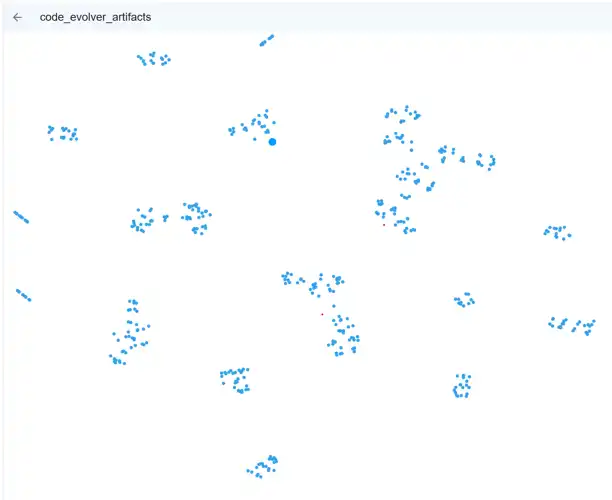
Nel nostro sistema salviamo i vettori per l'incorporamento in QdrantCity name (optional, probably does not need a translation) un database vettoriale e ci dà un modo preciso per vedere come il nostro spazio degli strumenti. Questo è il sistema di memoria del nostro sistema di costruzione del flusso di lavoro.
Diviso nei modelli originali (file Yaml nella directory degli strumenti) e in ogni elemento di codice generato per risolvere un'attività (e config for llms etc). Queste forme al toolkit per assemblare i worklfow. Pezzi precostruiti che vanno da;
In questo modo tutto il piano di lavoro è composabile e testabile poiché ogni elemento Python ha una suite di test, specifiche BDD, strumenti statici per verificare la correttezza e più valutatori LLM per assicurarne il funzionamento.
l'effetto collaterale è OGNI pezzo di codice che verrà eseguito in un flusso di lavoro è proprio lì, pronto a ispezionare come ogni creazione 'tool' porta a scrupoli Python ispezionabili.
Potete vedere il toos glaming insieme ad ogni blob essere un insieme semantaicamente collegato di strumenti come:
Tutti raggruppati insieme. Naturalmente specializzata per la natura del sistema.
In futuro vorremmo ottimizzare questi cluster per ridurre la base di codice a un sistema più piccolo, più stretto e ottimizzato.
Come possiamo tracciare le versioni, gli usi, le modifiche e le menzogne, possiamo ottimizzare selettivamente e "disfare cluster" i componenti critici più utilizzati e la maggior parte delle prestazioni come parte di come il sistema è intrinsecamente strutturato.
Diamo un'occhiata a cosa esiste realmente nel sistema ora.
Strumenti LLM (27 specialisti):
$ ls tools/llm/
article_analyzer.yaml          # Analyzes articles for structure/quality
code_explainer.yaml            # Explains code in natural language
code_optimizer.yaml            # Hierarchical optimization (local/cloud/deep)
code_reviewer.yaml             # Reviews code for quality/security
content_generator.yaml         # General content generation
doc_generator.yaml             # Generates documentation
fast_code_generator.yaml       # Quick code generation (small models)
general.yaml                   # General-purpose fallback
long_form_writer.yaml          # Novels, books (128K context!)
model_selector.yaml            # Selects best backend/model
performance_profiler.yaml      # Profiles code performance
quick_feedback.yaml            # Fast triage/feedback
quick_translator.yaml          # Fast translation
security_auditor.yaml          # Security vulnerability scanning
signalr_connection_parser.yaml # Parses SignalR connections
signalr_llmapi_management.yaml # Manages SignalR LLM API
summarizer.yaml                # Summarizes long content
task_to_workflow_router.yaml  # Routes tasks to workflows
technical_writer.yaml          # Technical documentation
translation_quality_checker.yaml # Validates translations
workflow_documenter.yaml       # Auto-generates workflow docs
Strumenti eseguibili:
$ ls tools/executable/
call_tool_validator.yaml       # Validates call_tool() usage
connect_signalr.yaml           # SignalR connection tool
document_workflow.yaml         # Workflow documentation generator
mypy_type_checker.yaml         # Static type checking
python_syntax_validator.yaml   # Syntax validation
run_static_analysis.yaml       # Static analysis runner
save_to_disk.yaml              # Disk persistence
signalr_hub_connector.yaml     # Hub connection
signalr_websocket_stream.yaml  # WebSocket streaming
unit_converter.yaml            # Unit conversion utilities
Strumenti OpenAPI:
$ ls tools/openapi/
nmt_translator.yaml            # Neural machine translation API
Totale strumenti: 50+
Totale linee di metadati: 5.464 linee in index.json
Lasciate che vi mostri lo strumento più sofisticato del sistema: _ottimizzatore di codice.
Definizione: tools/llm/code_optimizer.yaml (317 linee!)
Che cosa fa:
Ottimizzazione gerarchica:
optimization_levels:
  - name: "local"
    model_key: "escalation"  # qwen2.5-coder:14b
    cost_usd: 0.0
    expected_improvement: 0.10  # 10%
    triggers:
      - "Default for all optimizations"
      - "Quick wins, obvious inefficiencies"

  - name: "cloud"
    model_key: "cloud_optimizer"  # GPT-4/Claude
    cost_usd: 0.50
    expected_improvement: 0.30  # 30%
    triggers:
      - "Local improvement < 15%"
      - "Code is critical path"
      - "User explicitly requests it"

  - name: "deep"
    model_key: "deep_analyzer"
    cost_usd: 5.0
    expected_improvement: 0.50  # 50%
    triggers:
      - "Workflow/system-level optimization"
      - "Cloud improvement < 25%"
      - "Architectural changes needed"
Gestione dei costi:
cost_management:
  max_daily_budget: 50.0  # USD
  fallback_on_budget_exceeded: "local"

  optimization_strategy: |
    1. Always try LOCAL first (free)
    2. Escalate to CLOUD if:
       - Local improvement < 15%
       - Reuse count > 100
    3. Escalate to DEEP if:
       - Cloud improvement < 25%
       - System-level changes needed
Integrazione test:
test_integration:
  auto_update: true
  test_discovery:
    - "Find test_*.py in tests/"
    - "Identify tests for specific functions"
  test_generation:
    - "Generate missing tests"
    - "Add performance assertions"
    - "Create regression tests"
Gestione versione:
version_management:
  semver: true
  breaking_change_detection:
    - "Function signature changed"
    - "Return type changed"
    - "Dependencies added/removed"

  auto_migration:
    enabled: true
    conditions:
      - "No breaking changes"
      - "All tests pass"
      - "Improvement >= 10%"
Questo utensile singolo orchestrati:
Ed e' solo uno strumento in un sistema con 50+ strumenti.
Uno dei più meta tool: model_selettore.
Selezione della lingua naturale:
# User says: "using the most powerful code llm review this code"

selection = tools_manager.invoke_llm_tool(
    tool_id="model_selector",
    prompt="using the most powerful code llm review this code"
)

# Result:
{
    "backend": "anthropic",
    "model": "claude-3-opus-20240229",
    "reasoning": "Request specifies 'most powerful'. Claude Opus is the highest-quality code model.",
    "confidence": 0.95,
    "cost_tier": "very-high",
    "speed_tier": "slow",
    "quality_tier": "exceptional"
}
Come funziona:
def select_model(
    self,
    task_description: str,
    constraints: Optional[Dict[str, Any]] = None
) -> List[Dict[str, Any]]:
    """Select best model for task."""

    task_lower = task_description.lower()

    # Parse natural language preferences
    backend_preference = None
    if any(kw in task_lower for kw in ["openai", "gpt"]):
        backend_preference = "openai"
    elif any(kw in task_lower for kw in ["anthropic", "claude"]):
        backend_preference = "anthropic"

    # Parse model preference
    model_preference = None
    if "gpt-4o" in task_lower:
        model_preference = "gpt-4o"
    elif "opus" in task_lower:
        model_preference = "opus"

    # Analyze task characteristics
    needs_long_context = any(w in task_lower for w in
        ["book", "novel", "document", "large", "long"])
    needs_coding = any(w in task_lower for w in
        ["code", "function", "script", "program"])
    needs_speed = any(w in task_lower for w in
        ["quick", "fast", "immediate"])
    needs_quality = any(w in task_lower for w in
        ["complex", "analysis", "reasoning"])

    # Score each model
    scores = {}
    for backend_model_id, info in self.backends.items():
        score = 50.0  # Base

        # Backend preference
        if backend_preference and info["backend"] == backend_preference:
            score += 50

        # Model preference
        if model_preference and model_preference in info["model"].lower():
            score += 100  # Strong boost

        # Context window
        if needs_long_context:
            context = info.get("context_window", 8192)
            if context >= 100000:
                score += 40

        # Speed
        if needs_speed:
            if info["speed"] == "very-fast":
                score += 30

        # Quality
        if needs_quality:
            if info["quality"] == "excellent":
                score += 30

        # Specialization
        if needs_coding:
            if "code" in info.get("best_for", []):
                score += 35

        scores[backend_model_id] = score

    # Return top-ranked models
    ranked = sorted(scores.items(), key=lambda x: x[1], reverse=True)
    return [self.backends[bid] for bid, score in ranked[:3]]
Il sistema analizza il linguaggio naturale per selezionare i modelli. Si può dire:
E si dirige intelligentemente verso il backend giusto.
Il sistema tratta le API esterne allo stesso modo degli strumenti interni.
Esempio: Traduttore NMT
name: "NMT Translation Service"
type: "openapi"
description: "Neural machine translation API. VERY FAST but needs validation."

cost_tier: "low"
speed_tier: "very-fast"
quality_tier: "good"

openapi:
  spec_url: "http://localhost:8000/openapi.json"
  base_url: "http://localhost:8000"

code_template: |
  import requests

  def translate_text(text, source_lang="en", target_lang="de"):
      url = "http://localhost:8000/translate"
      params = {
          "text": text,
          "source_lang": source_lang,
          "target_lang": target_lang
      }
      response = requests.get(url, params=params)
      return response.json()["translations"][0]

tags: ["translation", "nmt", "api", "external"]
Al runtime:
# System loads OpenAPI spec
openapi_tool = OpenAPITool(
    tool_id="nmt_translator",
    spec_url="http://localhost:8000/openapi.json"
)

# Parses operations
operations = openapi_tool.list_operations()
# [
#   {"operation_id": "translate", "method": "GET", "path": "/translate"},
#   {"operation_id": "get_languages", "method": "GET", "path": "/languages"}
# ]

# Invoke
result = tools_manager.invoke_openapi_tool(
    "nmt_translator",
    "translate",
    parameters={"text": "hello", "source_lang": "en", "target_lang": "de"}
)

# Result: {"success": True, "data": {"translations": ["Hallo"]}}
Cosa viene rintracciato:
# Stored in RAG:
{
    "artifact_type": "API_INVOCATION",
    "tool_id": "nmt_translator",
    "operation_id": "translate",
    "status_code": 200,
    "success": True,
    "latency_ms": 124,
    "parameters": {"text": "hello", "source_lang": "en", "target_lang": "de"},
    "response": {"translations": ["Hallo"]}
}
Le API esterne ricevono lo stesso trattamento:
Uno degli strumenti più selvaggi: workflow_documenter.
Che cosa fa:
Prende un flusso di lavoro (a main.py file) e genera automaticamente una documentazione completa di:
README.txtTutto automaticamente.
Definizione: tools/llm/workflow_documenter.yaml (11.803 caratteri!)
Input:
{
    "workflow_path": "nodes/email_validator/main.py"
}
Output:
## Overview
Validates email addresses and optionally checks domain matching.

## What It Does
This workflow checks if an email address is valid using regex.
If you provide a domain, it checks if the email belongs to that domain.

## Required Inputs
- **email** (string, required)
  - The email address to validate
  - Example: "[email protected]"

- **domain** (string, optional)
  - The domain to check against
  - Example: "example.com"

## Process Flow
```mermaid
flowchart TD
    A[Start: Receive Input] --> B[Extract email and domain]
    B --> C{Email provided?}
    C -->|No| D[Error: email required]
    C -->|Yes| E[Validate email format]
    E --> F{Valid format?}
    F -->|No| G[Return: invalid]
    F -->|Yes| H{Domain provided?}
    H -->|No| I[Return: valid]
    H -->|Yes| J[Extract email domain]
    J --> K{Domains match?}
    K -->|Yes| I
    K -->|No| L[Return: domain_mismatch]
curl -X POST http://localhost:8080/execute/email_validator \
  -H "Content-Type: application/json" \
  -d '{"email": "[email protected]", "domain": "example.com"}'
result = call_tool("email_validator", {
    "email": "[email protected]",
    "domain": "example.com"
})
D: Questo può verificare se esiste un'email? A: No, questo valida solo il formato. Usa il controllo DNS/SMTP per verificare l'esistenza.
D: Supporta domini internazionali? R: Sì, ma la conversione di codice puny può essere necessaria.
**Saved to:** `nodes/email_validator/README.txt`

**The tool GENERATES ALL OF THIS** by analyzing the code.

## The Self-Expanding Toolkit

Here's where it gets wild: **tools generate tools**.

**Example Flow:**
Utente: "Ho bisogno di uno strumento che converta le temperature"
Sistema:
Nuovo strumento creato: temperature_converter.yaml
**The system grows its own toolkit.**

## Tool Statistics: What The System Knows

```python
stats = tools_manager.get_statistics()

# Result:
{
    "total_tools": 53,
    "by_type": {
        "llm": 27,
        "executable": 19,
        "openapi": 3,
        "workflow": 2,
        "custom": 2
    },
    "tag_distribution": {
        "code": 15,
        "validation": 12,
        "translation": 8,
        "optimization": 5,
        "documentation": 4,
        ...
    },
    "most_used": [
        {"id": "general", "name": "General Purpose LLM", "usage": 1247},
        {"id": "code_optimizer", "name": "Code Optimizer", "usage": 89},
        {"id": "nmt_translator", "name": "NMT Translator", "usage": 67},
        {"id": "email_validator", "name": "Email Validator", "usage": 45},
        {"id": "long_form_writer", "name": "Long-Form Writer", "usage": 23}
    ]
}
Il sistema sa:
E poi utilizza questi dati a:
Facciamo un passo indietro e pensiamo a quello che abbiamo costruito:
un sistema in cui:
Abbiamo creato un toolkit auto-ottimizzante che:
Questa non e' la gestione della configurazione.
Questo è l'ecologia strumento emergente.
Gli strumenti non sono risorse statiche. artefatti viventi in un sistema evolutivo.
Scenario 1: Auto-miglioramento del percorso critico
System detects: email_validator used 500 times, fitness: 0.75
Action: Trigger code_optimizer with level=cloud (high reuse count)
Result: email_validator v2.0.0, fitness: 0.92
Migration: Auto-update all 15 workflows using v1.x to v2.0.0
Validation: Re-run all tests, all pass
Outcome: 23% performance improvement, no breaking changes
Il sistema ha ottimizzato il proprio percorso critico senza intervento umano.
Scenario 2: Specializzazione Adattiva
Pattern detected: "translate article" requested 20 times
Analysis: Using nmt_translator + translation_quality_checker every time
Decision: Generate specialized "article_translator" tool
Implementation:
  - Combines both tools into one
  - Adds caching for common phrases
  - Optimizes for article-length text
  - Auto-generates documentation
Registration: article_translator v1.0.0 added to registry
Fitness: 0.89 (vs 0.73 for manual combination)
Usage: Immediately used for next translation request
Il sistema ha identificato un modello e creato uno strumento specializzato.
Scenario 3: Escalation consapevole dei costi
Request: "optimize this function"
Level 1 (LOCAL): qwen2.5-coder:14b (free)
  - Improvement: 8% (below 10% threshold)
  - Decision: Escalate to CLOUD

Level 2 (CLOUD): claude-3-5-sonnet ($0.50)
  - Improvement: 28% (good!)
  - Cost: $0.50 (within budget)
  - Decision: Accept

Result: Function optimized 28%, cost $0.50
Update: Store both versions in RAG
        Mark v1 as "suboptimal", v2 as "optimized"
Future: Always use v2 for this function
Il sistema ha speso soldi in modo intelligente per ottenere risultati migliori.
Lasciami catalogare quello che esiste davvero in questo momento.
Specialista del codice
code_explainer - Spiega il codice in lingua naturalecode_optimizer - Ottimizzazione gerarchica (locale/nuvola/profondo)code_reviewer - Valutazione della qualità e della sicurezzafast_code_generator - Generazione rapida con piccoli modellisecurity_auditor - Scansione vulnerabilitàperformance_profiler - Profilazione e analisi del codiceSpecialisti del contenuto:
long_form_writer - Romanzi, libri (128K contesto)content_generator - Contenuto generalearticle_analyzer - Struttura/qualità dell'articolosummarizer - Riepiloga il contenuto lungoproofreader - Grammatica e stileseo_optimizer - Ottimizzazione SEOoutline_generator - I contorni dei contenutiTraduzione:
quick_translator - Traduzione veloce (piccolo modello)translation_quality_checker - Convalida le traduzioniDocumentazione:
doc_generator - Documentazione del codicetechnical_writer - Documentazione tecnicaworkflow_documenter - Genera automaticamente i documenti del flusso di lavoroStrumenti di sistema:
general - Ripiego generalemodel_selector - Seleziona il miglior backend/modellotask_to_workflow_router - Percorso delle attività ai flussi di lavoroquick_feedback - Triage velocesignalr_connection_parser - Analisi connessioni SignalRsignalr_llmapi_management - Gestisce le API SignalR LLMConvalida:
call_tool_validator - Convalida l'utilizzo di call_tool()python_syntax_validator - Controllo sintassimypy_type_checker - Controllo statico del tipojson_output_validator - Convalida del formato JSONstdin_usage_validator - Convalida l'uso di stdinmain_function_checker - Controlli per la funzione principale ()node_runtime_import_validator - Convalida le importazioniAnalisi:
run_static_analysis - Gestisce strumenti di analisi staticiperformance_profiler - Prestazioni del codice dei profiliUtilità:
save_to_disk - persistenza del discounit_converter - Conversioni di unitàrandom_data_generator - Produzione di dati di provabuffer - Gestione bufferworkflow_datastore - Memorizzazione dei dati del flusso di lavorostream_processor - Elaborazione del flussosse_stream - Eventi inviati dal serverIntegrazione:
connect_signalr - Collegamento SignalRsignalr_hub_connector - Connessione al mozzosignalr_websocket_stream - WebSocket streamingDocumentazione:
document_workflow - Generatore di documentazione del flusso di lavoronmt_translator - API di traduzione automatica neuraleTotale: 53 utensili (e in crescita)
Ecco dove diventa davvero interessante: strumenti che compongono altri strumenti.
E quando uno strumento composto si evolve, ogni flusso di lavoro che lo utilizza migliora automaticamente.
Diamo un'occhiata ad un vero e proprio strumento composito del sistema:
Attività: "Tradurre questo articolo in spagnolo e convalidare la qualità"
Approccio tradizionale:
# Manual composition (brittle, no learning)
translated = nmt_translator.translate(text, "en", "es")
quality = translation_quality_checker.check(translated)
if quality.score < 0.7:
    # Retry or error
Approccio DSE:
Il sistema scopre che questo modello è usato frequentemente e crea automaticamente uno strumento composito:
# tools/llm/validated_translator.yaml (auto-generated!)
name: "Validated Translator"
type: "composite"
description: "Translates text and validates quality automatically. Created from usage pattern analysis."

workflow:
  steps:
    - id: "translate"
      tool: "nmt_translator"
      parallel: false

    - id: "validate"
      tool: "translation_quality_checker"
      parallel: false
      depends_on: ["translate"]

    - id: "retry"
      tool: "nmt_translator"
      condition: "quality_score < 0.7"
      params:
        beam_size: 10  # Higher quality on retry
      depends_on: ["validate"]

version: "1.0.0"
created_from: "usage_pattern_analysis"
parent_tools: ["nmt_translator", "translation_quality_checker"]
usage_count: 0  # Just created!
Cosa c'e' di selvaggio in tutto questo?
Quando nmt_translator evolve a v2.0.0 (forse il 20% più veloce), lo strumento composito utilizza automaticamente la nuova versione. Non sono necessari cambiamenti di codice.
Risultato: Ogni flusso di lavoro che utilizza validated_translator diventa il 20% più veloce senza alcuna modifica.
Ecco un esempio ancora più fresco: composizione parallela dell'utensile.
Attività: "Rileggete attentamente questo codice"
Approccio naive:
# Sequential (SLOW)
security_check = security_auditor.review(code)      # 8 seconds
style_check = code_reviewer.review(code)            # 12 seconds
performance_check = performance_profiler.analyze(code)  # 15 seconds
# TOTAL: 35 seconds
Composizione parallela del DSE:
# tools/llm/code_review_committee.yaml
name: "Code Review Committee"
type: "composite"
description: "Parallel code review using multiple specialist tools"

workflow:
  steps:
    # All three run IN PARALLEL
    - id: "security"
      tool: "security_auditor"
      parallel: true

    - id: "style"
      tool: "code_reviewer"
      parallel: true

    - id: "performance"
      tool: "performance_profiler"
      parallel: true

    # Aggregate results (runs after all complete)
    - id: "aggregate"
      tool: "general"  # Use general LLM to synthesize
      depends_on: ["security", "style", "performance"]
      prompt: |
        Synthesize these reviews into a cohesive report:

        Security: {security.result}
        Style: {style.result}
        Performance: {performance.result}

        Create a prioritized action list.

execution:
  max_parallel: 3
  timeout_per_tool: 20s
  aggregate_timeout: 10s
Esecuzione:
gantt
    title Code Review Committee (Parallel Execution)
    dateFormat  s
    axisFormat %S

    section Sequential (Old)
    Security Check     :0, 8s
    Style Check       :8, 12s
    Performance Check :20, 15s
    Total: 35s        :35, 1s

    section Parallel (New)
    Security Check     :0, 8s
    Style Check       :0, 12s
    Performance Check :0, 15s
    Aggregate Results :15, 5s
    Total: 20s        :20, 1s
Risultato: 35 secondi → 20 secondi (43% più veloce!)
E quando security_auditor evolve a v3.0.0 (diciamo, 30% più veloce), l'intero comitato diventa più veloce automaticamente.
Ecco la parte veramente selvaggia: strumenti agiscono come geni.
Osservazione: Quando uno strumento si rivela utile, si diffonde attraverso il sistema.
Esempio reale: il modello di controllo di qualità
Day 1: translation_quality_checker created
  - Usage: 1 (manual test)
  - Workflows using it: 0

Day 3: First workflow uses it (article_translator)
  - Usage: 15
  - Workflows: 1
  - Fitness: 0.78

Day 7: Quality checker "gene" spreads
  - Usage: 127
  - Workflows using it: 7
    1. article_translator
    2. validated_translator (composite)
    3. batch_translator
    4. multilingual_content_generator
    5. documentation_localizer
    6. seo_multilingual_optimizer
    7. chat_translator
  - Fitness: 0.91 (improved through evolution!)

Day 14: Mutation detected
  - translation_quality_checker v2.0.0
  - Change: Added context-aware validation
  - Breaking change: Output format different
  - All 7 workflows auto-migrate
  - New fitness: 0.94

Day 30: Specialization emerges
  - Original tool spawns specialist: article_quality_checker
  - Optimized specifically for article-length text
  - 40% faster than general checker
  - article_translator auto-switches to specialist
  - General checker still used by other 6 workflows
Questa è la diffusione genetica letterale:
Il percorso del codice è sempre ottimale perché:
Ecco la parte molto intelligente: è possibile migliorare tutti gli strumenti contemporaneamente.
Scenario: Hai 20 flussi di lavoro, ciascuno utilizzando 5-10 strumenti. Totale: ~100 invocazioni strumento.
Sistema tradizionale:
Workflow 1 uses Tool A v1.0 (fitness: 0.70)
Workflow 2 uses Tool A v1.0 (fitness: 0.70)
...
Workflow 20 uses Tool A v1.0 (fitness: 0.70)

To improve: Manually edit Tool A, test on each workflow (20 tests!)
Risk: Breaking changes affect all 20 workflows
Sistema DSE:
# Trigger evolution for Tool A
evolve_tool("translation_quality_checker")

# System automatically:
# 1. Analyzes usage patterns across all 20 workflows
# 2. Identifies common failure modes
# 3. Generates improved version (v2.0)
# 4. A/B tests v1.0 vs v2.0 on EACH workflow
# 5. Calculates fitness improvement per workflow
# 6. Auto-migrates workflows where v2.0 is better
# 7. Keeps v1.0 for workflows where v2.0 regresses
Risultato:
Workflow 1: Tool A v2.0 (fitness: 0.85) ✓ Migrated
Workflow 2: Tool A v1.0 (fitness: 0.72) ✗ Kept old (v2 was worse)
Workflow 3: Tool A v2.0 (fitness: 0.89) ✓ Migrated
...
Workflow 20: Tool A v2.0 (fitness: 0.91) ✓ Migrated

Total migrated: 18/20 workflows (90%)
Average fitness improvement: +15%
Hai addestrato UN solo strumento e migliorato i flussi di lavoro EIGTEEN contemporaneamente.
La parte veramente selvaggia: cascate di evoluzione attraverso il grafico della dipendenza.
Esempio:
Tool: nmt_translator v1.0 (fitness: 0.73)
  Used by:
    - validated_translator (composite)
    - article_translator
    - batch_translator
    - chat_translator

Evolution triggered: nmt_translator v1.0 → v2.0
  Improvement: 25% faster, 10% better quality
  Fitness: 0.73 → 0.88

Cascade effect:
  1. validated_translator FITNESS: 0.82 → 0.91 (automatic!)
  2. article_translator FITNESS: 0.79 → 0.87 (automatic!)
  3. batch_translator FITNESS: 0.75 → 0.83 (automatic!)
  4. chat_translator FITNESS: 0.71 → 0.78 (automatic!)

Tools using those tools ALSO improve:
  - multilingual_content_generator: 0.76 → 0.84
  - documentation_localizer: 0.81 → 0.88
  - seo_multilingual_optimizer: 0.69 → 0.77

Total workflows improved: 11
Total time spent: 0 (automatic propagation!)
Total code changes: 0
Un evento di evoluzione ha migliorato i flussi di lavoro EVEN senza alcun intervento manuale.
Perché gli strumenti tracciano il fitness, risultati cache, e auto-evolvono, il sistema esegue sempre la migliore implementazione disponibile.
Esempio di esecuzione:
User: "Translate this article to Spanish"

System thinks:
  1. Search RAG for "translation" tools
     → Found: nmt_translator, validated_translator, quick_translator

  2. Calculate fitness for this specific task:
     - nmt_translator: 0.88 (fast, good quality)
     - validated_translator: 0.91 (slower, validated)
     - quick_translator: 0.76 (very fast, lower quality)

  3. Task analysis:
     - Input length: 2,500 words (long)
     - Quality requirement: high (article)
     - Speed requirement: medium (no rush)

  4. Decision: Use validated_translator (highest fitness + quality match)

  5. Check cache:
     - Cache key: hash(tool_id + normalized_prompt)
     - Found: 3 cached results
       - v1.0 (fitness: 0.82, age: 5 days)
       - v1.1 (fitness: 0.89, age: 2 days)
       - v2.0 (fitness: 0.91, age: 1 hour)
     - Select: v2.0 (highest fitness, most recent)

  6. Execute: Return cached v2.0 result (INSTANT)

  7. Update metrics:
     - validated_translator.usage_count++
     - validated_translator.cache_hits++
     - validated_translator.avg_latency_ms (no change, cache hit)
Il sistema:
Il percorso del codice è ottimizzato ad ogni passo:
Cerchiamo di essere precisi sul perché questo è evoluzione sintetica diretta e non solo "caching with versioning":
Strumenti come geni:
class Tool:
    """A tool is a genetic unit that:
    - Replicates (used by multiple workflows)
    - Mutates (evolves to new versions)
    - Competes (fitness-based selection)
    - Specializes (variants emerge)
    - Dies (low-fitness tools pruned)
    """

    # Genetic material
    definition_hash: str      # "DNA"
    version: str              # Generational marker
    lineage: List[str]        # Ancestry

    # Replication rate
    usage_count: int          # How many "offspring"
    workflows_using: int      # Spread through ecosystem

    # Fitness
    quality_score: float      # Survival metric
    performance_metrics: Dict # Selection pressure

    # Mutation
    breaking_changes: List    # Genetic incompatibility
    evolution_history: List   # Mutation record
Evoluzione diretta:
# Unlike natural selection (random mutations),
# DSE uses DIRECTED mutations based on data:

def evolve_tool(tool_id: str):
    """Directed evolution with learning."""

    # Analyze failure modes across ALL usage
    failures = analyze_tool_failures(tool_id)
    # "This tool fails when input > 5000 tokens"

    # Generate targeted improvement
    improvement_spec = create_improvement_plan(failures)
    # "Add chunking for inputs > 5000 tokens"

    # Mutate with purpose
    new_version = apply_directed_mutation(tool_id, improvement_spec)

    # Test fitness
    fitness_improvement = a_b_test(old_version, new_version)

    # Selection
    if fitness_improvement > threshold:
        promote_version(new_version)  # Survives
    else:
        discard_version(new_version)  # Dies
Il "Gene Pool":
53 tools in registry (current generation)
├── 27 LLM tools (specialist genes)
├── 19 executable tools (utility genes)
├── 3 OpenAPI tools (external interface genes)
├── 4 composite tools (multi-gene complexes)

Total genetic variations across versions: ~200+
Active in current generation: 53
Archived (evolutionary dead-ends): ~150
Visualizzazione della diffusione genetica:
graph TB
    T1["nmt_translator v1.0<br/>Fitness: 0.73<br/>Usage: 5"] --> T2["nmt_translator v2.0<br/>Fitness: 0.88<br/>Usage: 127"]

    T2 --> W1["validated_translator<br/>Composite: nmt + quality<br/>Fitness: 0.91"]
    T2 --> W2["article_translator<br/>Uses: nmt<br/>Fitness: 0.87"]
    T2 --> W3["batch_translator<br/>Uses: nmt<br/>Fitness: 0.83"]

    W1 --> U1["multilingual_content<br/>Uses: validated<br/>Fitness: 0.84"]
    W1 --> U2["doc_localizer<br/>Uses: validated<br/>Fitness: 0.88"]

    T2 -.->|Mutation| T3["nmt_translator v3.0<br/>Specialization: articles<br/>Fitness: 0.94"]

    T3 --> W2

    style T1 fill:#ffcccc
    style T2 fill:#ccffcc
    style T3 fill:#ccccff
    style W1 fill:#ffffcc
    style W2 fill:#ffffcc
    style W3 fill:#ffffcc
    style U1 fill:#ffeecc
    style U2 fill:#ffeecc
Eredità genetica:
# Child tool inherits from parent
article_quality_checker:
  parent: translation_quality_checker
  inherited_attributes:
    - quality_metrics
    - validation_patterns
    - error_detection

  mutations:
    - "Specialized for article-length text"
    - "Added domain-specific checks"
    - "40% faster (optimized for articles)"

  fitness_inheritance:
    parent_fitness: 0.91
    child_fitness: 0.94  # Improvement!

  selection_advantage:
    - Chosen over parent for article tasks
    - Parent still used for general translation
Liscio, vero?
Si', e' davvero selvaggio.
Abbiamo costruito un sistema dove:
Non e' una metafora.
E' un'evoluzione sintetica diretta.
Dopo aver eseguito questo sistema per settimane:
Se gli strumenti possono:
E ora che si fa?
Ecco cosa la Parte 7 non ha spiegato completamente:
I flussi di lavoro che si evolvono sono fatti di strumenti. Gli strumenti che compongono i flussi di lavoro? Si evolvono anche. Il sistema che gestisce l'evoluzione? Anche gli strumenti. - Le metriche che tracciano l'idoneità?
Sono attrezzi fino in fondo.
E ognuno di loro:
Non abbiamo costruito un generatore di codice.
Abbiamo costruito un toolkit di auto-espansione, auto-ottimizzazione, auto-documentazione che sembra generare codice.
La distinzione è importante.
Perché quando gli strumenti diventano unità evolutive, quando rintracciano la propria forma fisica, quando si riproducono, mutano e competono...
Non hai una cassetta degli attrezzi.
Hai un'ecologia.
E le ecologie si evolvono.
Ma cosa succede quando l'evoluzione rompe le cose? Quando una mutazione strumento introduce un bug critico? Quando l'ottimizzazione rende uno strumento peggiore invece di meglio?
E' qui che entra in gioco la Parte 9. auto-guarigione attraverso potatura lineage-awareSistema in cui gli strumenti non solo si evolvono, ricordano ogni fallimento, prugna rami falliti, e propagano quella conoscenza per prevenire errori simili in tutto l'ecosistema.
Quando i tuoi strumenti possono rompersi, il sistema dovrebbe ricordare perché e mai ripetere l'errore.
Repository: per lo piùlucid.dse
File chiave:
src/tools_manager.py (2.293 linee) - Gestione degli strumenti coresrc/rag_integrated_tools.py (562 linee) - Integrazione RAGsrc/openapi_tool.py (313 linee) - Supporto OpenAPIsrc/model_selector_tool.py (460 righe) - Selezione dei modellitools/index.json (5.464 righe) - Registro degli strumentitools/llm/*.yaml (27 strumenti) - Definizioni specialistiche LLMtools/executable/*.yaml (19 strumenti) - Strumenti eseguibilitools/openapi/*.yaml (3 strumenti) - integrazioni APIDocumentazione:
LLMS_AS_TOOLS.md - Sistema di selezione LLMWORKFLOW_DOCUMENTATION_TOOL.md - Documentazione automaticaCHAT_TOOLS_GUIDE.md - Guida all'uso degli strumentiTOOL_PACKAGING.md - Guida allo sviluppo degli strumentiNavigazione della serie:
Questa è la parte 8 della serie Semantic Intelligence. La parte 7 ha mostrato l'architettura DSE complessiva. Questo articolo rivela la complessità nascosta: ogni strumento del sistema traccia l'utilizzo, evolve le implementazioni, i risultati delle cache e partecipa alla selezione basata sul fitness. Il toolkit non è solo una risorsa è un'ecologia evolutiva che si espande, ottimizza e documenta se stesso. Gli strumenti generano strumenti. Gli strumenti migliorano gli strumenti. E l'intero sistema diventa più intelligente nel tempo.
Il codice è reale, in esecuzione localmente su Ollama, metriche di tracciamento genuino, e in realtà in evoluzione. È sperimentale, a volte instabile, e sicuramente "vibe-codificato." Ma gli strumenti funzionano, il tracciamento funziona, e l'evoluzione funziona. Il toolkit cresce se stesso.
Queste esplorazioni si collegano al romanzo di fantascienza "Michael" sull'intelligenza artificiale emergente e sulle implicazioni dei sistemi che si ottimizzano. Gli strumenti descritti qui sono implementazioni reali che dimostrano come la pressione evolutiva crea specializzazione, come le funzioni di fitness guidano la selezione, e come i sistemi di auto-miglioramento sviluppano naturalmente proprietà eco-simili. Se questo porta alle reti di strumenti in scala planetaria della Parte 6, o qualcosa di completamente inaspettato, rimane da vedere. Questo è ciò che lo rende un esperimento.
Etichette: #AI #Tools #RAG #UsageTracking #Evolution #Fitness #Caching #Versioning #Ollama #Python #EmergentIntelligence #SelfOptimization #ToolEcology

© 2026 Scott Galloway — Unlicense — All content and source code on this site is free to use, copy, modify, and sell.
